As Nature inBlended®

Biotin 5,000µg Gummies – Beauty Benefits, Food Sources and Safety
Share
Biotin, also known as vitamin B7, is an essential water-soluble B vitamin. It helps the body process fats, carbohydrates and proteins, and contributes to the maintenance of normal hair and skin.
Biotin gummies are often marketed as a convenient way to support hair, skin and nails. But how much do most people need, and is a high-strength gummy likely to make a visible difference?
What does biotin do?
Biotin works as a coenzyme for several enzymes involved in metabolism. These enzymes help the body use nutrients from food and take part in the processing of fatty acids, glucose and amino acids.
Biotin also contributes to:
- The maintenance of normal hair.
- The maintenance of normal skin.
- The maintenance of normal mucous membranes.
- Normal energy-yielding metabolism.
- Normal macronutrient metabolism.
- Normal functioning of the nervous system and normal psychological function.
These are recognised nutritional functions of biotin. They do not mean that taking more than the body needs will necessarily improve energy, mood, hair growth or skin appearance.
Do biotin gummies help hair growth?
Biotin deficiency can cause hair thinning or hair loss, alongside other symptoms. In someone with a genuine deficiency, restoring adequate biotin intake is important.
However, biotin deficiency is uncommon in people eating a varied diet. There is little good-quality evidence that high-dose biotin improves ordinary hair growth in people who already have adequate biotin levels.
Hair loss has many possible causes, including iron deficiency, thyroid disorders, hormonal changes, illness, stress, medication and inherited pattern hair loss. Taking biotin without identifying the cause may delay more appropriate assessment.
If hair loss is sudden, persistent, patchy or accompanied by other symptoms, speak to a GP or qualified healthcare professional rather than relying on a beauty supplement alone.
What about skin and nails?
Biotin is involved in normal skin function, and deficiency can cause a characteristic skin rash.
Evidence for using biotin supplements to improve skin in otherwise healthy adults is also limited. It is therefore not possible to promise that a 5,000µg gummy will make nails stronger, improve complexion or change hair thickness.
A balanced diet, adequate overall nutrition, suitable skincare and addressing any underlying health issue are more dependable foundations.
How much biotin do adults need?
The European food-labelling Nutrient Reference Value (NRV) for biotin is 50µg per day. The US National Institutes of Health Office of Dietary Supplements reports an Adequate Intake of 30µg per day for adults. An Adequate Intake is used when there is not enough evidence to set a formal Recommended Dietary Allowance.
The product provides 5,000µg (5mg) in each gummy, equivalent to 10,000% of the 50µg NRV. That is a high supplemental dose compared with ordinary nutritional reference amounts.
The NHS says most people should obtain the biotin they need from a varied and balanced diet. It advises that taking 0.9mg (900µg) or less per day in supplements is unlikely to cause harm. One 5mg gummy is more than five times that amount.
Adults can take one to two gummies daily. As each gummy contains 5mg, two gummies would provide 10mg (10,000µg). Do not assume that taking the maximum suggested serving is necessary or more beneficial. Discuss high-dose use with a healthcare professional, particularly if you take medication or have blood tests planned.
Foods that contain biotin
Biotin is found in a range of foods, including:
- Cooked eggs.
- Liver and other organ meats.
- Fish and meat.
- Nuts and seeds.
- Sweet potatoes.
- Spinach and broccoli.
The amount varies between foods and preparation methods. Eating a varied diet is generally sufficient for healthy adults. Raw egg white contains avidin, a protein that binds biotin and can reduce its absorption if eaten frequently in large amounts; cooking denatures avidin.
An important warning: biotin can interfere with blood tests
High-dose biotin can interfere with certain laboratory tests. Some tests use a biotin-based technology, and excess biotin in a blood sample can cause results to be falsely high or falsely low.
Tests that may be affected include some thyroid hormone tests, vitamin D tests and certain cardiac tests. Some troponin tests, which help clinicians assess possible heart attacks, can be affected. The precise risk depends on the laboratory method and the amount and timing of biotin exposure.
Always tell your GP, hospital team and laboratory if you take biotin, especially a 5mg or 10mg supplement. Give them the dose and when you last took it. They can advise whether a different test or timing is needed. There is no single stop-taking period that applies to every test and every person. Never delay urgent medical attention or assume symptoms are harmless because you take a supplement.
Is high-dose biotin safe?
There is no established tolerable upper intake level for biotin, because evidence has not been sufficient to identify a level at which toxicity reliably occurs. This does not prove that very high doses are useful or risk-free.
The best-established concern is interference with laboratory testing, which can potentially lead to incorrect diagnosis or treatment. The NHS says there is not enough evidence to know the effects of taking high daily doses; we advise people not to take more biotin than necessary.
Biotin may already be present in multivitamins, B-complex products and hair, skin and nail formulas. Combining products can increase the total dose considerably.
The product label advises consulting a healthcare practitioner before use, particularly if taking medication or under medical supervision. It should be kept in a cool, dry place, under 25°C, and out of the reach of children. The product is not intended for children.
About the As Nature inBlended Biotin Gummies
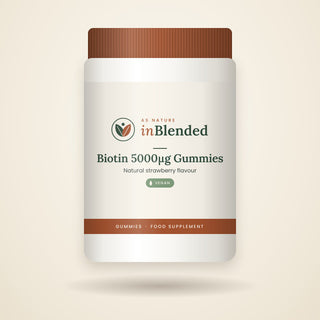
It contains Biotin 5,000µg Gummies , with natural strawberry flavour and 5,000µg of biotin per gummy (10,000% NRV). It describes the product as suitable for vegetarians and vegans and free from gluten, milk, soy and yeast, as well as artificial colours, flavours, sweeteners and preservatives.
The listed ingredients are glucose syrup, sugar, water, pectin, a vitamin premix containing D-biotin and maltodextrin, citric acid, sodium citrate, natural strawberry flavouring, coconut oil/carnauba wax as an anti-sticking agent, and natural colouring (anthocyanadins).
The takeaway
Biotin is an essential nutrient that contributes to normal hair and skin and helps the body metabolise nutrients. Most people can obtain enough from food, and deficiency is uncommon.
One of these gummies supplies 5mg of biotin, a high dose compared with normal nutritional reference amounts. The most important precaution is that high-dose biotin can interfere with certain blood tests. Make sure healthcare professionals and laboratories know you are taking it, and consider whether a high-strength supplement is appropriate before starting it.
*Food supplements should not be used as a substitute for a varied, balanced diet and a healthy lifestyle. Do not exceed the recommended daily dose. This article is for general education and is not individual medical advice.*
Sources and further reading
- As Nature inBlended – Biotin 5,000µg Gummies: https://www.asnatureinblended.com/products/biotin-5000ug-gummies
- NHS – Vitamins and minerals: B vitamins and folic acid: https://www.nhs.uk/conditions/vitamins-and-minerals/vitamin-b/
- US National Institutes of Health, Office of Dietary Supplements – Biotin: Health Professional Fact Sheet: https://ods.od.nih.gov/factsheets/biotin-healthprofessional/
- US Food and Drug Administration – Biotin interference with troponin laboratory tests: https://www.fda.gov/medical-devices/in-vitro-diagnostics/biotin-interference-troponin-lab-tests-assays-subject-biotin-interference
- Health Canada – Biotin and the risk of false laboratory test results: https://www.canada.ca/en/health-canada/services/drugs-health-products/medical-devices/biotin-risk-false-lab-test-results.html
This article is for general information and education only. It is not medical advice and is not intended to diagnose, treat, cure or prevent any disease. Food supplements should not be used as a substitute for a varied, balanced diet and a healthy lifestyle. Do not exceed the recommended daily intake. If you are pregnant, breastfeeding, taking medication, under medical supervision or have a health condition, speak to your GP or pharmacist before use. Keep out of the reach of children.