As Nature inBlended®

Digestive Supplements for Dogs: Inulin, Glutamine and Evidence
Share
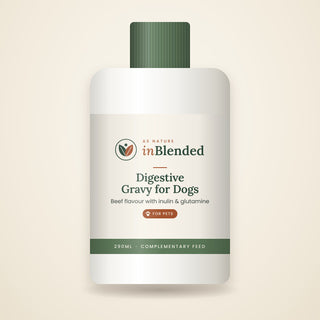
It is a beef-flavoured liquid gravy intended to be mixed into a dog's daily food. It lists vitamin B12, zinc, inulin, L-glutamine and turmeric powder.
Each 5ml serving typically provides:
- Vitamin B12: 0.5 micrograms
- Zinc: 1.5mg
- Inulin: 250mg
- L-glutamine: 83mg
- Turmeric powder: 80mg
The suggested amount is one level 5ml teaspoon per 10kg bodyweight daily. Refrigerate after opening and use within 60 days. It states that the product is not suitable for puppies under four months or pregnant or lactating bitches,; we advise owners to consult a veterinary surgeon if their dog is under veterinary supervision.
Introduction
Digestive supplements for dogs are often marketed as a way to support the gut microbiome, maintain healthy stools or soothe the digestive tract. Some ingredients have a plausible nutritional role, and there is veterinary research into prebiotic fibres and gut health. But a product containing several familiar ingredients is not automatically a treatment for diarrhoea, inflammatory bowel disease, food intolerance or other medical conditions.
1. What is the Canine Gut Microbiome?
A dog's digestive tract contains a complex community of bacteria and other microorganisms. This community helps ferment some dietary fibres, produces metabolites such as short-chain fatty acids, and interacts with the intestinal lining and immune system.
The microbiome is influenced by diet, age, health, medication, stress and the environment. A change in stool quality does not necessarily mean that a dog needs a supplement: causes can include dietary indiscretion, abrupt food changes, parasites, infection, medication effects and underlying disease.
Veterinary organisations caution against treating microbiome tests or supplements as simple solutions. The clinical usefulness of microbiome testing is still limited, and the effect of a supplement depends on its ingredients, dose and the individual animal.
2. Inulin: a Prebiotic Fibre
Inulin is a fermentable dietary fibre found naturally in plants such as chicory root. It is not digested in the same way as many ordinary carbohydrates. Instead, gut microorganisms can ferment it, producing short-chain fatty acids and other metabolites.
Prebiotic fibres may help influence the composition and activity of intestinal microorganisms. In dogs, studies have investigated changes in faecal bacteria, fermentation products and stool characteristics. However, results from healthy animals do not prove that a small quantity of inulin will treat a dog's digestive disorder.
The product provides 250mg of inulin per 5ml serving. Whether this amount produces a meaningful effect will depend on the dog's bodyweight, the full daily quantity, the rest of its diet and individual tolerance.
Fermentable fibres can also cause gas, flatulence, abdominal discomfort or looser stools in some animals, particularly if introduced too quickly or if the amount is not well tolerated.
3. L-Glutamine: an Amino Acid Used by the Gut
Glutamine is an amino acid involved in normal metabolism. Cells lining the intestine can use it as a fuel source, and it has been studied in relation to intestinal barrier function and recovery during illness.
Veterinary research into glutamine-containing nutritional approaches is often conducted in specific clinical settings, and results cannot automatically be applied to every dog or every supplement.
It contains 83mg of L-glutamine per 5ml serving. This should be viewed as the stated amount in the formula, not as an established therapeutic dose for canine gastrointestinal disease. Owners should not increase the serving in an attempt to treat symptoms.
4. Turmeric: Traditional Use and the Limits of Evidence
Turmeric contains plant compounds called curcuminoids, including curcumin. These have been studied for biological activity in laboratory and animal research, including pathways involved in inflammation.
However, turmeric powder and concentrated curcumin extracts are not interchangeable.
It contains 80mg of turmeric powder per 5ml serving. The actual curcumin exposure therefore cannot be calculated from the listed amount alone.
Turmeric products may not be appropriate for every animal, particularly where there are existing health conditions or medicines. Discuss use with a vet if your dog is receiving treatment or has a history of digestive, liver, gallbladder or bleeding problems.
5. Vitamin B12 and Zinc
Vitamin B12, also known as cobalamin, is essential for normal cell function and metabolism. Dogs with certain chronic intestinal or pancreatic conditions may develop low B12 levels because absorption is impaired. In those cases, a veterinarian may test B12 and recommend a specific treatment plan.
The product lists 0.5 micrograms of vitamin B12 per 5ml serving. This is a nutritional inclusion, not a replacement for veterinary diagnosis or treatment of B12 deficiency.
Zinc is an essential mineral involved in many enzymes, normal immune function and maintenance of skin and other tissues. The product lists 1.5mg per 5ml serving. The appropriate total intake depends on the dog's complete diet, bodyweight and life stage. Adding supplements without considering the diet can lead to unnecessary or excessive intake.
6. What Does the Veterinary Evidence Say About Prebiotics?
Veterinary reviews recognise that prebiotic fibres such as inulin can alter fermentation and the gut microbiome in dogs and cats. Some studies have reported changes in beneficial bacterial populations or faecal metabolites.
But the evidence is not the same as proof of a treatment effect. A 2024 review of biotics in dogs and cats noted that evidence for prebiotics in specific gastrointestinal disorders remains limited, and fermentable fibres can sometimes aggravate signs such as bloating, flatulence or diarrhoea.
A review in Veterinary Record also explains that dietary fibres can influence gut bacteria and their metabolites, while emphasising that the clinical evidence for using prebiotics alone in particular canine gastrointestinal conditions is not well established.
The practical conclusion is that prebiotic fibres may have a useful role in some diets, but they is not a guaranteed remedy for digestive illness.
7. How to Introduce a Digestive Topper
If your vet agrees that a complementary feed is appropriate:
- Check the full ingredient list and serving guidance.
- Use the recommended amount for the dog's weight; do not exceed it.
- Introduce any new food or supplement carefully and monitor stool quality, appetite and comfort.
- Keep the dog's main diet complete and balanced.
- Stop and seek veterinary advice if symptoms worsen or a reaction occurs.
We advise one level 5ml teaspoon per 10kg bodyweight daily, refrigeration after opening and use within 60 days. It also states that the product is not suitable for puppies under four months or pregnant or lactating bitches.
8. When Digestive Symptoms Need a Vet
A supplement should never delay veterinary assessment. Contact a vet if diarrhoea or vomiting persists, recurs, or is accompanied by reduced appetite, weight loss or lethargy.
Seek urgent veterinary advice if your dog has repeated vomiting, blood in vomit or stools, black tarry stools, a swollen or painful abdomen, collapse, marked weakness, signs of dehydration, or may have swallowed a toxin or foreign object. Puppies, elderly dogs and dogs with existing medical conditions may need earlier assessment.
9. Who May Need Extra Caution?
We advise veterinary consultation for dogs under veterinary supervision and says it is unsuitable for puppies under four months and pregnant or lactating bitches.
Owners should also discuss any new supplement with their vet if their dog has chronic gastrointestinal disease, pancreatitis, kidney or liver disease, food allergies, or takes regular medication. A vet can help decide whether a dietary change, diagnostic test, prescription diet or targeted treatment is more appropriate.
The Bottom Line
Digestive Gravy for Dogs combines inulin, L-glutamine, turmeric powder, vitamin B12 and zinc in a beef-flavoured liquid topper. Inulin is a prebiotic fibre with a plausible role in supporting gut microbial activity, while glutamine, B12 and zinc have recognised nutritional functions.
The veterinary evidence supports a measured conclusion: some fibres can influence the canine gut microbiome, but evidence that this particular combination treats digestive disorders is not established. Use it only as directed, keep your dog's main diet balanced, and involve a vet when symptoms are persistent, severe or unexplained.
This article is for general education and is not a substitute for veterinary advice or treatment.
References and Further Reading
- Salavati Schmitz S. Evidence-based use of biotics in the management of gastrointestinal disorders in dogs and cats. Veterinary Record Supplement. https://bvajournals.onlinelibrary.wiley.com/doi/10.1002/vetr.4916
- Wilson et al. The influence of ‘biotics’ on the gut microbiome of dogs and cats. Veterinary Record (2024). https://www.newswise.com/pdf_docs/173194125214033_Veterinary%20Record%20-%202024%20-%20Wilson%20-%20The%20influence%20of%20%20biotics%20%20on%20the%20gut%20microbiome%20of%20dogs%20and%20cats.pdf
- Merck Veterinary Manual. Nutritional Requirements of Small Animals – dietary fibre and prebiotics. https://www.merckvetmanual.com/management-and-nutrition/nutrition-small-animals/nutritional-requirements-of-small-animals
- American Animal Hospital Association. Microbiome, Prebiotics and Postbiotics. https://www.aaha.org/resources/2021-aaha-nutrition-and-weight-management-guidelines/microbiome-prebiotics-postbiotics/
- The Function of Probiotics and Prebiotics on Canine Intestinal Health and Their Evaluation Criteria. Microorganisms (2024). https://pmc.ncbi.nlm.nih.gov/articles/PMC11205510/
The article deliberately distinguishes the nutritional roles of the listed ingredients from evidence for clinical treatment. It does not claim that this product prevents or cures canine gastrointestinal disease.
In our shop: Digestive Gravy for Dogs – 290ml
Related guides
- L-Glutamine Powder
- Dietary Fibre Complex: Psyllium, Plant Fibre and Digestive Health
- Turmeric Tea: Benefits, Evidence, How to Make It and Safety
This article is for general information and education only. It is not medical advice and is not intended to diagnose, treat, cure or prevent any disease. Food supplements should not be used as a substitute for a varied, balanced diet and a healthy lifestyle. Do not exceed the recommended daily intake. If you are pregnant, breastfeeding, taking medication, under medical supervision or have a health condition, speak to your GP or pharmacist before use. Keep out of the reach of children.