As Nature inBlended®

Konjac & Green Tea Complex: Benefits, Evidence and Safety
Share
Supplements that combine fibre, tea extracts, botanicals and nutrients are often marketed around weight management, appetite, energy or metabolism. It is worth looking beyond the headline ingredients to understand what each component can realistically contribute, how strong the evidence is and where sensible precautions are needed.
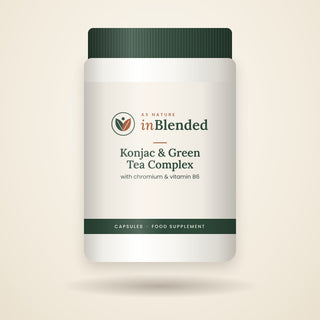
Our Konjac & Green Tea Complex is a herbal and nutrient combination food supplement. The listed ingredients are glucomannan (konjac), raspberry fruit extract, caffeine anhydrous, bitter orange, L-tyrosine, green tea extract, zinc gluconate, choline bitartrate, African mango seed extract, Siberian ginseng, vitamin B6, guarana, cayenne pepper, kelp extract, black pepper extract (BioPerine) and chromium picolinate.
Those details matter when assessing both likely effects and safety. We therefore cannot infer the strength of the formula from the ingredient list alone.
What's in each serving
90 capsules per pot. Each serving (2 capsules) provides:
| Ingredient | Amount | %NRV† |
|---|---|---|
| Vitamin B6 | 10mg | 714% |
| Choline | 8mg | |
| Zinc | 4mg | 40% |
| Chromium | 50μg | 125% |
| Iodine | 40μg | 26% |
| **Glucomannan (Konjac) Powder | 1000mg | |
| Green Tea* | 1000mg | |
| Raspberry Fruit* | 600mg | |
| Siberian Ginseng* | 350mg | |
| African Mango* | 200mg | |
| Cayenne Pepper* (Chilli) | 80mg | |
| Caffeine | 50mg | |
| L-Tyrosine | 40mg | |
| Guarana Seed* | 40mg | |
| Citrus Aurantium Fruit | 40mg | |
| Piperine* | 3mg* |
†NRV = Nutrient Reference Value. *Equivalent weight from extract.
Ingredients: Glucomannan Powder (Amorphophallus Konjac), Capsule Shell: Hydroxypropyl Methylcellulose (HPMC), Raspberry Fruit Extract (Rubus Idaeus), Caffeine Anhydrous Powder, Bitter Orange Whole Fruit Powder (Citrus Aurantium), L-Tyrosine, Green Tea Extract (Camellia Sinensis), Zinc Gluconate, Choline Bitartrate, African Mango Seed Extract (Irvingia Gabonensis), Siberian Ginseng Extract (Eleutherococcus Senticosus), Pyridoxine Hydrochloride, Guarana Seed Extract (Paullinia Cupana), Cayenne Pepper Fruit Extract (Capsicum Annuum), Kelp Extract (Laminaria Japonica), Bioperine (Black Pepper Extract), Chromium Picolinate.
How to take: Take 2 capsules, 2 or 3 times per day with water.WarningThere is a risk of choking for people with swallowing difficulties and when ingested with inadequate fluid intake. Plenty of water should be consumed with this product to ensure it reaches the stomach.
What is glucomannan?
Glucomannan is a soluble dietary fibre obtained from the konjac plant (Amorphophallus konjac). It absorbs water and forms a thick gel. Like other forms of fibre, it can contribute to normal bowel function when used with adequate fluid and as part of a fibre-containing diet.
Glucomannan has also been studied for fullness, cholesterol and weight management. Research findings for weight loss are inconsistent and, where an effect has been observed, it tends to be modest. It is not a fat burner or a reliable way to achieve significant weight loss.
A fibre supplement is not a replacement for vegetables, fruit, pulses, wholegrains and other foods that provide fibre alongside a range of nutrients.
Taking glucomannan safely
Glucomannan expands when it absorbs water. It is important to follow the product label and take it with sufficient water. Taking a fibre supplement without enough fluid can cause swallowing difficulties and, rarely, obstruction. People with swallowing difficulties or a history of narrowing or obstruction of the digestive tract should seek professional advice before using it.
Fibre supplements can also affect the absorption of some oral medicines. Ask a pharmacist about suitable timing rather than assuming it can be taken alongside every medicine. Bloating, wind, loose stools, constipation or abdominal discomfort can occur, particularly when fibre intake is increased suddenly.
Green tea extract: catechins and EGCG
Green tea comes from Camellia sinensis. Its leaves contain polyphenols called catechins, including epigallocatechin gallate (EGCG). Green tea as a brewed drink has a long history of consumption. Concentrated extracts in capsules are different: they can deliver a much larger and more concentrated dose than an ordinary cup of tea.
Human research into green tea extracts and weight management has produced mixed results. Any average effect on body weight appears small, and green tea extract is not a proven weight-loss treatment.
There is an important safety distinction. The UK Committee on Toxicity and the European Food Safety Authority have reviewed reports of liver injury associated with concentrated green tea catechin supplements. EFSA found that supplement intakes of 800 mg EGCG per day or more were associated with increased liver enzymes in clinical trials, but it could not identify a dose from extracts that could be guaranteed safe for everyone. Rare, unpredictable reactions have also been reported at lower intakes.
People with liver disease, anyone taking medicines that may affect the liver, or anyone who develops symptoms such as unusual tiredness, nausea, abdominal pain, dark urine or yellowing of the skin or eyes should seek medical advice and stop taking the supplement pending advice. Do not combine multiple concentrated green tea products without checking their total content.
Caffeine and guarana
Caffeine is a stimulant that can temporarily increase alertness and reduce the perception of tiredness. Guarana (Paullinia cupana) is another botanical source of caffeine. The formula lists both caffeine anhydrous and guarana, as well as green tea, which may contribute additional caffeine depending on the extract.
Caffeine from all sources counts, including coffee, tea, energy drinks, pre-workout products and other supplements.
Too much caffeine can cause restlessness, anxiety, palpitations, raised blood pressure, digestive upset and disrupted sleep. People who are sensitive to caffeine, have cardiovascular conditions, high blood pressure, anxiety or sleep problems should be particularly cautious and seek advice before using a multi-stimulant formula.
Bitter orange
Bitter orange (Citrus aurantium) can contain p-synephrine, a compound used in some weight-management supplements. Research has not established a dependable weight-loss benefit. Studies of bitter orange often involve small numbers of participants and multi-ingredient products, making it difficult to identify what caused any reported effect.
There are also safety concerns. Some studies suggest bitter orange or synephrine may affect heart rate or blood pressure, although findings are not consistent and serious events reported with combination products cannot always be attributed to bitter orange alone.
Because this formula also contains caffeine and guarana, people should not assume that combining these ingredients is harmless. Anyone with heart or blood-pressure problems, or taking medicines that affect heart rate or blood pressure, should ask a GP or pharmacist before use. Avoid stacking it with other stimulant or weight-management supplements.
The other botanical ingredients
African mango (Irvingia gabonensis): Small studies have explored African mango extracts for body weight and metabolic markers, but the evidence is limited and not sufficiently consistent to establish a meaningful weight-management benefit.
Siberian ginseng (Eleutherococcus senticosus): Despite its common name, this is not the same plant as Asian or Panax ginseng. It has a history of traditional use for fatigue and stamina, but robust evidence for reliable benefits in otherwise healthy adults is limited. It may interact with medicines, so professional advice is sensible for anyone taking regular medication.
Raspberry fruit extract: Raspberries provide fibre and polyphenols as foods. Evidence from eating raspberries cannot automatically be applied to a concentrated extract in a multi-ingredient capsule.
L-tyrosine: Tyrosine is an amino acid used by the body to make proteins and several important compounds, including thyroid hormones and catecholamine neurotransmitters. The body can usually make it, and it is also found in protein-containing foods. People taking thyroid medication or medicines such as monoamine oxidase inhibitors should ask a healthcare professional before using a tyrosine-containing product.
Cayenne pepper: Cayenne contains capsaicinoids, which create its characteristic heat. Small studies have investigated effects on appetite and energy expenditure, but results do not demonstrate a clinically meaningful or dependable weight-loss effect. It can aggravate reflux or stomach irritation in some people.
Black pepper extract (BioPerine): Piperine is a compound in black pepper. It is sometimes included because it can influence the absorption and metabolism of certain substances. That same property means it may alter how some medicines are handled by the body. Anyone taking prescription or regular medication should check with a pharmacist before using a piperine-containing supplement.
What do the vitamins and minerals contribute?
It contains zinc, choline, iodine, chromium and vitamin B6 and describes authorised nutrient functions.
- Zinc contributes to normal macronutrient metabolism and normal protein synthesis, among other established functions. It is found in meat, shellfish, dairy foods, beans, nuts and wholegrains.
- Choline contributes to normal lipid metabolism and normal liver function. Dietary sources include eggs, meat, fish, dairy foods and some beans.
- Iodine contributes to normal thyroid hormone production and normal thyroid function. Sources include fish, milk, eggs and some seaweeds. Kelp can be a concentrated and variable source, so the actual iodine amount matters.
- Chromium contributes to normal macronutrient metabolism and the maintenance of normal blood glucose levels. These authorised nutrient claims do not mean that chromium treats diabetes or produces weight loss.
- Vitamin B6 contributes to normal energy-yielding metabolism and the regulation of hormonal activity. It is found in poultry, fish, potatoes, bananas and other foods.
Avoid unintentionally doubling up on zinc, iodine or vitamin B6 from multiple products. Long-term excessive vitamin B6 intake can cause peripheral neuropathy, which may include tingling, burning or numbness in the hands and feet. EFSA's adult upper level is 12 mg per day from all sources, so it is sensible to check the combined amount across supplements.
Iodine deserves particular attention in people with thyroid conditions or those taking thyroid medicines. Both too little and too much iodine can disrupt thyroid function, and kelp iodine content can vary.
Does the combination support weight loss?
There is no good basis for assuming that combining several ingredients automatically makes a supplement more effective. Glucomannan has been studied as a fibre that may increase fullness, but weight-loss findings are inconsistent. Green tea extract, African mango, raspberry extract and bitter orange have not been shown to produce dependable, substantial weight loss.
Caffeine can temporarily increase alertness, but feeling more stimulated is not the same as losing body fat. A supplement cannot compensate for an overall eating pattern, activity, sleep and other factors that influence body weight.
A balanced approach to weight management is built around sustainable food choices, appropriate portions, regular movement, adequate sleep and support suited to an individual's circumstances. Anyone experiencing unexplained weight changes or considering a significant weight-management plan should seek appropriate healthcare advice.
Who should take extra care?
The formula contains caffeine and is not recommended for children or people who are pregnant or breastfeeding. It also advises speaking to a GP or pharmacist before use when taking medication or under medical supervision.
In particular, seek professional advice before using this combination if you:
- Have high blood pressure, a heart rhythm condition or another cardiovascular condition;
- Have liver disease or a history of unexplained liver problems;
- Have a thyroid condition or take thyroid medication;
- Take medicines for diabetes, blood pressure, heart conditions or other long-term conditions;
- Take several supplements containing caffeine, green tea extract, iodine, zinc or vitamin B6;
- Have swallowing difficulties or a digestive-tract condition that makes fibre supplements unsuitable.
Stop taking the product and seek medical advice if you experience concerning symptoms. Chest pain, fainting, severe breathlessness or a sustained rapid or irregular heartbeat require urgent medical attention.
A note about product transparency
For a multi-ingredient product like this, the full ingredient list is useful, but it is not enough on its own to judge the formula. Consumers would benefit from clear per-serving quantities for glucomannan, caffeine from all sources, green tea extract and EGCG, bitter orange and synephrine, iodine, chromium, zinc and vitamin B6. The recommended daily serving should also be stated clearly and consistently.
The As Nature inBlended perspective
At As Nature inBlended, we believe supplements should be considered as part of a varied, balanced diet and healthy lifestyle, not as shortcuts or substitutes for everyday habits. Ingredients such as fibre, vitamins and minerals have useful roles in nutrition, but evidence for concentrated botanical blends is often less certain.
The most helpful choice is an informed one: understand what a product contains, check the quantities, consider your own circumstances and ask a qualified healthcare professional when medicines or health conditions are involved.
Food supplements should not be used as a substitute for a varied, balanced diet and a healthy lifestyle. Do not exceed the recommended daily dose.
Sources and further reading
- As Nature inBlended – Konjac & Green Tea Complex product information: https://www.asnatureinblended.com/products/konjac-and-green-tea-complex
- US National Institutes of Health, Office of Dietary Supplements – Dietary Supplements for Weight Loss (glucomannan and stimulant ingredients): https://ods.od.nih.gov/factsheets/WeightLoss-HealthProfessional/
- US National Center for Complementary and Integrative Health – Green Tea: Usefulness and Safety: https://www.nccih.nih.gov/health/green-tea
- UK Committee on Toxicity – Statement on the Hepatotoxicity of Green Tea Catechins (2024): https://cot.food.gov.uk/sites/default/files/2024-12/COT%2008.2024%20-%20Statement%20on%20the%20hepatotoxicity%20of%20green%20tea%20catechins_FINAL_0.pdf
- European Food Safety Authority – Scientific opinion on the safety of green tea catechins: https://doi.org/10.2903/j.efsa.2018.5239
- US National Center for Complementary and Integrative Health – Bitter Orange: Usefulness and Safety: https://www.nccih.nih.gov/health/bitter-orange
- US National Institutes of Health, Office of Dietary Supplements – Vitamin B6: https://ods.od.nih.gov/factsheets/vitaminb6-consumer/
Related guides
- Dietary Fibre Complex: Psyllium, Plant Fibre and Digestive Health
- Green Tea — Catechins, Antioxidants and What the Evidence Really Says
- Black Pepper Tea: Benefits, Evidence, How to Make It and Safety
In our shop: Konjac & Green Tea Complex
This article is for general information and education only. It is not medical advice and is not intended to diagnose, treat, cure or prevent any disease. Food supplements should not be used as a substitute for a varied, balanced diet and a healthy lifestyle. Do not exceed the recommended daily intake. If you are pregnant, breastfeeding, taking medication, under medical supervision or have a health condition, speak to your GP or pharmacist before use. Keep out of the reach of children.