As Nature inBlended®

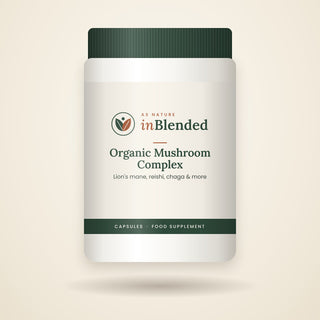
Organic Mushroom Complex
Share
Mushrooms have been used as foods for thousands of years, and some species also have long histories in traditional herbal practices. In recent years, supplements containing reishi, chaga, lion's mane, maitake and shiitake have become popular, with products often marketed for immunity, energy, focus and general wellbeing.
There is genuine scientific interest in these fungi. They contain compounds such as beta-glucans, polysaccharides and triterpenes that are being studied in laboratory and clinical research. However, promising laboratory findings do not automatically translate into proven benefits in people. The strength of evidence varies considerably between mushroom species, preparations and health outcomes.
What's in each serving
90 capsules per pot. Each capsule provides:
| Ingredient | Amount | %NRV† |
|---|---|---|
| Vitamin C (from Organic Acerola Fruit (Malphigia glabra)) | 12mg | 15% |
| Organic Shiitake mushroom (Lentinula edodes) | 130mg | |
| Organic Chaga Mushroom (Inonotus obliquus) | 80mg | |
| Organic Maitake Mushroom (Grifola frondosa) | 80mg | |
| Organic Reishi Mushroom (Ganoderma lucidum) | 65mg | |
| Organic Astragalus Root (Astragalus membranaceus) | 20mg | |
| Organic Lion's Mane Mushroom (Hericium erinaceus) | 20mg | |
| Organic Black Pepper (Piper nigrum) | 5mg |
†NRV = Nutrient Reference Value. *Equivalent weight from extract.
Ingredients: Organic Shiitake Mushroom Powder (Lentinula edodes), Capsule Shell: Hydroxypropyl Methylcellulose (HPMC), Organic Chaga Mushroom Powder (Inonotus obliquus), Organic Maitake Mushroom Powder (Grifola frondosa), Organic Acerola Fruit Powder (Malphigia glabra) (17% Vitamin C), Organic Reishi Mushroom Powder (Ganoderma lucidum), Organic Astragalus Root Powder (Astragalus membranaceus), Organic Lion’s Mane Mushroom Powder (Hericium erinaceus), Organic Black Pepper Powder (Piper nigrum).
How to take: Take 1 capsule, 1 to 3 times per day or as required.
What is in Organic Mushroom Complex?
It is an organic mushroom and herbal complex containing five mushroom powders, acerola fruit, astragalus root and black pepper.
The listed ingredients are:
- Organic shiitake mushroom powder (Lentinula edodes).
- Organic chaga mushroom powder (Inonotus obliquus).
- Organic maitake mushroom powder (Grifola frondosa).
- Organic acerola fruit powder (Malpighia glabra), stated to contain 17% vitamin C.
- Organic reishi mushroom powder (Ganoderma lucidum).
- Organic astragalus root powder (Astragalus membranaceus).
- Organic lion's mane mushroom powder (Hericium erinaceus).
- Organic black pepper powder (Piper nigrum).
- Hydroxypropyl methylcellulose (HPMC) capsule shell.
The ingredients are certified organic by the Soil Association.
Do not assume that the ingredient list or product title tells you the dose used in clinical research.
Why Are Mushrooms Being Studied?
Edible and medicinal mushrooms contain a range of naturally occurring compounds. These include beta-glucans and other polysaccharides, which have attracted interest because they can interact with components of the immune system in laboratory settings.
Different mushrooms contain different compounds, and the composition can vary depending on the species, growing conditions, part of the mushroom used and processing method. A whole mushroom powder is not necessarily equivalent to a concentrated extract that has been standardised to particular compounds.
This distinction is important. A study of a purified extract, a specific polysaccharide or an injectable preparation cannot automatically be used as evidence for an ordinary oral mushroom powder.
Shiitake: an Edible Mushroom with a Long Food History
Shiitake (Lentinula edodes) is widely eaten, particularly in East Asian cooking. It provides nutrients and contains compounds such as lentinan, a beta-glucan that has been studied for its effects on immune activity.
Some research has investigated shiitake extracts and lentinan in clinical settings, but findings from specialised preparations cannot be assumed to apply to eating shiitake or taking any mushroom powder. Much of the research into infection and cancer-related effects is laboratory-based or involves preparations given by routes other than ordinary oral supplementation.
Chaga: What Do We Know?
Chaga (Inonotus obliquus) is a fungus that commonly grows on birch trees in colder regions. It has traditionally been used as a tea and is now sold in powders and extracts.
Laboratory studies have identified antioxidant and other biological activities in chaga compounds. These findings are interesting, but reliable human clinical evidence for claimed benefits such as immune enhancement, reduced inflammation or improved energy is lacking.
Chaga deserves particular caution. It can contain substantial oxalate, and published case reports have described serious kidney injury following prolonged or high-intake chaga powder use. The Memorial Sloan Kettering Cancer Center also notes possible bleeding-related interactions. People with kidney disease or a history of kidney stones should be especially cautious and seek professional advice before using chaga supplements.
Reishi: the Traditional 'mushroom of Longevity'
Reishi (Ganoderma lucidum) has a long history in traditional East Asian herbal practice. It contains polysaccharides and triterpenes and is often marketed for immune support, vitality and general wellbeing.
Some studies have examined immune markers or quality-of-life outcomes, but the findings are not sufficient to make broad treatment claims.
Reishi may increase bleeding risk, particularly when taken with anticoagulant or antiplatelet medicines. Memorial Sloan Kettering also notes possible interactions with immunosuppressant medicines and reports of liver injury associated with some reishi products. People receiving cancer treatment, taking blood-thinning medication or using medicines that suppress the immune system should not start reishi without discussing it with their healthcare team.
Maitake: the 'dancing Mushroom'
Maitake (Grifola frondosa) is an edible mushroom sometimes called hen of the woods. It contains polysaccharides, including beta-glucans, that have been investigated for immune and metabolic effects.
Much of the evidence for maitake's effects on blood glucose, cholesterol and immune activity comes from laboratory or animal studies. Human clinical data are limited, and there is not enough evidence to say that a maitake supplement treats diabetes, lowers cholesterol or prevents illness.
Maitake may affect blood glucose and could add to the effects of diabetes medicines. There are also reports of potential interaction with warfarin and increased bleeding risk. People taking these medicines should seek medical advice before using concentrated maitake supplements.
Lion's Mane: Interest in Brain and Cognitive Health
Lion's mane (Hericium erinaceus) is an edible mushroom with distinctive white, cascading spines. It has attracted attention because laboratory research has identified compounds that may influence nerve growth factor pathways.
Small human studies have explored memory, mood and stress, including in selected groups of older adults and people with mild cognitive impairment. Larger, better-designed trials are needed.
The results of one preparation cannot be assumed to apply to another.
Lion's mane is generally eaten as a food, but supplement use can cause abdominal discomfort, nausea or skin rash in some people. Anyone with a mushroom allergy should avoid it.
Acerola: a Natural Source of Vitamin C
Acerola (Malpighia glabra) is a tropical fruit known for its naturally high vitamin C content. Vitamin C is an essential nutrient with well-established functions in the body.
Vitamin C contributes to:
- Normal functioning of the immune system.
- Normal collagen formation for the normal function of blood vessels, bones, cartilage, gums, skin and teeth.
- Protection of cells from oxidative stress.
- Normal energy-yielding metabolism and the reduction of tiredness and fatigue.
- Increased absorption of iron from food.
These are established nutrient functions, not evidence that acerola or this mushroom blend prevents infections or treats illness. To understand how much vitamin C the product supplies, check the actual milligram amount and percentage of the nutrient reference value on the label. The statement that the acerola powder contains 17% vitamin C is not the same as saying the daily serving provides 17% of the NRV.
Other food sources of vitamin C include citrus fruit, kiwi, berries, blackcurrants, peppers, broccoli and potatoes.
Astragalus Root
Astragalus (Astragalus membranaceus) is a plant root used in traditional Chinese herbal practice. It contains compounds including polysaccharides and saponins and has been investigated for possible effects on immune signalling.
Much of the evidence is from laboratory research or studies involving specific preparations and clinical settings. There is not enough high-quality evidence to claim that astragalus in a general supplement prevents infections or treats chronic illness.
Because astragalus may influence immune activity, people with autoimmune conditions or those taking immunosuppressant medicines should consult their healthcare professional before using it. People receiving cancer treatment should also discuss herbal supplements with their oncology team.
Black Pepper
Black pepper (Piper nigrum) contains piperine, a compound that can influence the absorption and metabolism of certain substances. It is sometimes included in supplement blends for this reason.
However, changing absorption or metabolism can also affect medicines. People taking regular medication should check with a pharmacist or doctor before using multi-ingredient supplements containing black pepper extracts or powders.
Immunity, Energy and General Wellbeing: What Can Be Said?
The immune system is complex and relies on many nutrients, cells and biological processes. Vitamin C has an established role in normal immune function, and mushrooms contain compounds that are being researched for their effects on immune pathways.
Changes in laboratory immune markers do not automatically translate into fewer illnesses or better health outcomes.
Likewise, laboratory findings about antioxidant activity do not prove that taking the supplement will reduce oxidative stress in a meaningful way in people, improve energy or protect against disease. The evidence for these broad claims remains insufficient.
Safety and Who Should Take Extra Care?
Edible mushrooms used in cooking are familiar foods, but concentrated powders and extracts can provide different exposures. A multi-ingredient supplement also makes it harder to identify which ingredient may be responsible if an unwanted effect occurs.
Important precautions include:
- Chaga: possible high oxalate exposure and reported cases of serious kidney injury; possible bleeding interaction.
- Reishi: possible increased bleeding risk, potential interactions with immunosuppressants and reports of liver injury.
- Maitake: possible effects on blood glucose and interaction with diabetes medicines; possible interaction with warfarin.
- Astragalus: may affect immune activity and may not be suitable with immunosuppressant medicines or some autoimmune conditions.
- Lion's mane: possible digestive discomfort or skin reactions; avoid if allergic to mushrooms.
- Black pepper: piperine may affect the metabolism or absorption of some medicines.
The product's own warning advises speaking to a GP or pharmacist before use if pregnant, breastfeeding, taking medication or under medical supervision. Follow the label and do not use the supplement as a substitute for prescribed treatment. Anyone with kidney or liver disease, a bleeding disorder, an autoimmune condition or a history of kidney stones should seek individual advice before using this multi-ingredient formula.
The as Nature Inblended View
At As Nature inBlended, we believe it is important to explain both the traditional background and the current scientific evidence for natural ingredients. Organic Mushroom Complex combines five mushroom powders with acerola, astragalus and black pepper. Acerola provides vitamin C, a nutrient with well-established roles in normal immune function and protection of cells from oxidative stress.
The research into medicinal mushrooms is interesting, but much of it remains preliminary. Results from laboratory studies, animal experiments or concentrated extracts cannot automatically be applied to a capsule containing unspecified quantities of mushroom powders.
A varied diet that includes edible mushrooms, fruit and vegetables can contribute useful nutrients and dietary variety. Supplements should be considered carefully, particularly when several botanical ingredients are combined.
Key Takeaways
- The product lists shiitake, chaga, maitake, reishi and lion's mane, alongside acerola, astragalus and black pepper.
- Mushrooms contain compounds that are being studied, but evidence for broad immune, energy and cognitive benefits in people remains limited.
- Acerola is a source of vitamin C, which contributes to normal immune function and protection of cells from oxidative stress.
- Chaga may present a particular concern for people with kidney problems because of oxalate exposure and published kidney-injury case reports.
- Reishi and maitake may interact with blood-thinning medicines; maitake may also affect blood glucose.
- People taking medication or living with a medical condition should seek advice before using this multi-ingredient supplement.
References and Further Reading
- Memorial Sloan Kettering Cancer Center – Reishi Mushroom: https://www.mskcc.org/cancer-care/integrative-medicine/herbs/reishi-mushroom
- Memorial Sloan Kettering Cancer Center – Chaga Mushroom: https://www.mskcc.org/cancer-care/integrative-medicine/herbs/chaga-mushroom
- Memorial Sloan Kettering Cancer Center – Lion's Mane Mushroom: https://www.mskcc.org/cancer-care/integrative-medicine/herbs/lions-mane-mushroom
- Memorial Sloan Kettering Cancer Center – Maitake: https://www.mskcc.org/cancer-care/integrative-medicine/herbs/maitake
- Memorial Sloan Kettering Cancer Center – Shiitake Mushroom: https://www.mskcc.org/cancer-care/integrative-medicine/herbs/shiitake-mushroom
- US National Institutes of Health, Office of Dietary Supplements – Vitamin C: Fact Sheet for Health Professionals: https://ods.od.nih.gov/factsheets/VitaminC-HealthProfessional/
- Which? – What are functional mushrooms and do they really have health benefits? https://www.which.co.uk/news/article/what-are-functional-mushrooms-and-do-they-really-have-health-benefits-a2WET0v51AXQ
Product page: https://www.asnatureinblended.com/products/multi-mushroom-organic-complex
Important Information
This article is for general educational purposes only and is not individual medical advice. Food supplements should not be used as a substitute for a varied, balanced diet and healthy lifestyle. Follow the product label. Anyone who is pregnant, breastfeeding, taking medication, has a medical condition or is under medical supervision should consult a suitably qualified healthcare professional before using a supplement.
This article is for general information and education only. It is not medical advice and is not intended to diagnose, treat, cure or prevent any disease. Food supplements should not be used as a substitute for a varied, balanced diet and a healthy lifestyle. Do not exceed the recommended daily intake. If you are pregnant, breastfeeding, taking medication, under medical supervision or have a health condition, speak to your GP or pharmacist before use. Keep out of the reach of children.