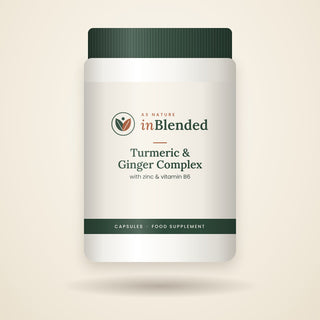
As Nature inBlended®

Turmeric & Ginger Complex: curcumin, absorption, evidence and safety
Share
What's in each serving
90 capsules per pot. Each capsule provides:
| Ingredient | Amount | %NRV† |
|---|---|---|
| Zinc – 1.5mg15%Vitamin B6 – 0.21mg15%Also provides:Turmeric Root* (providing 150mg Curcumin) | 3158mg | |
| Organic Turmeric Root | 200mg | |
| Ginger Root* | 200mg | |
| Cayenne Pepper* | 40mg | |
| Piperine* (black pepper) | 5mg* |
†NRV = Nutrient Reference Value. *Equivalent weight from extract.
Ingredients: Turmeric Root Powder (Curcuma Longa) (ORGANIC), Turmeric Root Extract (Curcuma Longa), Capsule Shell: Hydroxypropyl Methylcellulose (HPMC), Stoneground Brown Rice Flour (Oryza Sativa), Ginger Root Extract (Zingiber Officinale), Rice Extract (Oryza Sativa), Black Pepper Extract (Piper nigrum), Cayenne Pepper Extract (Capsicum Annuum), Zinc Citrate, Pyridoxine Hydrochloride.
How to take: Take 1 capsule, 1 to 3 times per day with food or as advised.
Introduction
Turmeric & Ginger Complex combines organic turmeric root powder and turmeric root extract with ginger root extract, black pepper powder, cayenne pepper fruit extract, zinc citrate and vitamin B6. The capsule shell is hydroxypropyl methylcellulose (HPMC), and the ingredient list also includes stoneground brown rice flour and bamboo extract.
Turmeric and ginger are familiar culinary roots, but concentrated supplements are not the same as using spices in food. Turmeric contains curcuminoids, including curcumin, which have been studied for their biological effects. Ginger contains gingerols and related compounds. Black pepper contains piperine, which can influence the absorption and metabolism of some substances.
Turmeric and curcumin: what is the difference?
Turmeric (Curcuma longa) is the yellow-orange rhizome used in cooking. Curcumin is one of the main curcuminoids found in turmeric and is the compound most often studied in supplement research.
Turmeric powder contains a mixture of natural plant compounds, while extracts may concentrate particular constituents. Two products both labelled “turmeric extract” can differ considerably in concentration, curcuminoid content and formulation.
Curcumin has shown antioxidant and anti-inflammatory activity in laboratory studies. These mechanisms are scientifically interesting, but laboratory activity alone does not demonstrate that a supplement prevents or treats inflammation-related diseases in people.
What does human research say about turmeric?
Turmeric and curcumin have been investigated in clinical studies for a range of conditions, particularly knee osteoarthritis. Some small trials and reviews have reported improvements in pain or stiffness. However, preparations, doses and study quality vary.
A Cochrane review, with evidence current to November 2025, concluded that turmeric supplements may make little or no difference to pain, physical function or quality of life compared with placebo in people with knee osteoarthritis. The review judged confidence in the evidence to be low or very low. This is a useful reminder that promising early findings do not always translate into a clear clinical benefit.
The US National Center for Complementary and Integrative Health also says there is not enough evidence to definitively conclude that turmeric or curcumin is beneficial for health purposes. Some evidence is promising, but higher-quality research is needed.
Why is black pepper included?
Black pepper (Piper nigrum) contains piperine. Piperine has been studied for its ability to alter the absorption and metabolism of curcumin and other compounds. Curcumin is poorly absorbed when taken orally, and some manufacturers combine it with piperine in an attempt to increase exposure.
Greater absorption is not automatically better or safer. Piperine can also affect drug-metabolising enzymes and transport systems, potentially changing the levels of some medicines in the body. The extent of any interaction depends on the amount, the medicine and the individual.
Consumers therefore cannot determine whether the amount is sufficient to alter curcumin absorption or whether it could be relevant to a medicine interaction.
Ginger root extract
Ginger (Zingiber officinale) contains gingerols, shogaols and other naturally occurring compounds. It is widely used as a food and has been studied in people for nausea and some types of discomfort.
Evidence for ginger supplements in osteoarthritis and other pain conditions is mixed. Different studies use different preparations and quantities, so their findings cannot be assumed to apply to an unspecified amount of ginger extract in this formula.
Ginger can cause heartburn, abdominal discomfort or diarrhoea in some people. People taking anticoagulants or antiplatelet medicines should ask a pharmacist before using concentrated ginger supplements, particularly if they are also taking turmeric or other botanicals.
Cayenne pepper
Cayenne (Capsicum frutescens) contains capsaicinoids, including capsaicin. Capsaicin has been studied in topical creams and patches for certain types of pain.
Oral cayenne can cause burning sensations, reflux or stomach irritation. People with reflux or a sensitive digestive system may find concentrated pepper extracts uncomfortable.
Bamboo extract
Bamboo (Bambusa vulgaris) extract is included in the ingredient list.
Consumers would need the actual silica content and relevant human evidence to assess such claims.
Zinc: an essential mineral
The product uses zinc citrate. Zinc is an essential mineral involved in normal immune function, DNA synthesis, cell division and many enzyme processes. Zinc contributes to the maintenance of normal bones and the normal function of the immune system when the product meets the conditions for the authorised UK nutrition and health claims.
These are normal nutritional functions. They do not mean that zinc treats arthritis or that taking additional zinc improves immunity in someone who already has an adequate intake.
These are not interchangeable figures: the weight of the zinc compound is not the same as the amount of zinc itself.
High zinc intakes over time can interfere with copper absorption and may lead to copper deficiency. Zinc supplements can also interact with some antibiotics and penicillamine. Check the amount in all supplements you take and ask a pharmacist about spacing from medicines.
Vitamin B6
Vitamin B6, listed as pyridoxine hydrochloride, contributes to normal energy-yielding metabolism, normal nervous-system function, normal psychological function and the regulation of hormonal activity. It also contributes to the reduction of tiredness and fatigue under the conditions for authorised nutrition claims.
These functions do not mean that extra B6 treats pain, arthritis or inflammation.
Long-term excessive vitamin B6 intake from supplements can cause peripheral neuropathy, which may involve tingling, burning, numbness or problems with balance. EFSA set an adult tolerable upper intake level of 12mg per day in
- Add together B6 from multivitamins, B-complex products and other supplements rather than considering each product in isolation.
An important turmeric supplement safety warning
Turmeric used as a culinary spice is different from concentrated turmeric or curcumin supplements. The UK Committee on Toxicity has reviewed reports of liver injury associated with turmeric and turmeric-derived supplements. It concluded that there is reasonable evidence of a link, although these reactions are rare and appear to be unpredictable in susceptible individuals.
This is especially relevant when black pepper or piperine is included, although the risk for this particular product cannot be calculated from the information on its page.
Stop taking a turmeric supplement and seek medical advice promptly if you develop unusual tiredness, nausea, loss of appetite, dark urine, pale stools, itching or yellowing of the skin or eyes.
People with liver disease, gallstones or bile-duct problems should seek medical advice before using concentrated turmeric products. Avoid turmeric supplements during pregnancy unless a healthcare professional specifically advises otherwise; food-level culinary use is different.
Who should take particular care?
Speak to a GP or pharmacist before using this product if you:
- Take regular prescription medicines, especially anticoagulants, antiplatelet medicines, medicines with a narrow therapeutic range or medicines affected by drug-metabolising enzymes.
- Have liver disease, gallstones, bile-duct obstruction or a history of supplement-related liver injury.
- Have diabetes or take medicines that affect blood glucose.
- Take antibiotics or penicillamine, because zinc can affect their absorption.
- Already use supplements containing zinc, vitamin B6, turmeric, curcumin, ginger or black pepper extract.
- Have reflux or a sensitive digestive system.
- Are pregnant, trying to conceive or breastfeeding.
- Are due to have surgery or are under medical supervision.
Do not stop prescribed medication or use this supplement as a replacement for medical treatment.
What consumers should check
Before choosing a turmeric and ginger supplement, look for:
- The quantity of turmeric root powder and extract per daily serving.
- The extract ratio and percentage of total curcuminoids, including curcumin.
- The amount of ginger extract and its standardisation, if applicable.
- The piperine content of the black pepper ingredient.
- The elemental zinc amount and vitamin B6 amount per serving.
- Clear warnings about liver symptoms, medicines, pregnancy and gallbladder conditions.
- Independent quality testing and a clearly stated daily serving.
These details are particularly important for a product combining turmeric with black pepper, because the formulation may affect absorption and interaction potential.
Conclusion
Turmeric & Ginger Complex combines two familiar culinary roots with black pepper, cayenne, bamboo extract, zinc and vitamin B6. Curcumin has been studied extensively, particularly for knee osteoarthritis, but the best current reviews still describe the evidence as uncertain.
The most important safety consideration is that rare cases of liver injury have been linked to concentrated turmeric or curcumin supplements. Black pepper may alter absorption and medicine metabolism, so the combination deserves particular care for people taking regular medication.
Important: Food supplements should not replace a varied, balanced diet or prescribed treatment. Follow the product label and do not exceed the recommended daily dose.
Sources and further reading
- As Nature inBlended – Turmeric & Ginger Complex product information
- UK Committee on Toxicity – Statement on the potential risk to human health of turmeric and curcumin supplements
- US National Center for Complementary and Integrative Health – Turmeric: Usefulness and Safety
- Cochrane – What are the benefits and risks of turmeric supplements for people with osteoarthritis?
- NIH Office of Dietary Supplements – Zinc: Fact Sheet for Health Professionals
- NIH Office of Dietary Supplements – Vitamin B6: Fact Sheet for Health Professionals
*This article is educational information, not individual medical advice. It distinguishes evidence about individual ingredients from evidence about the finished product.*
Related guides
- Ginger Tea: Benefits, Evidence, How to Make It and Safety
- Turmeric Tea: Benefits, Evidence, How to Make It and Safety
- Black Pepper Tea: Benefits, Evidence, How to Make It and Safety
In our shop: Turmeric & Ginger Complex
This article is for general information and education only. It is not medical advice and is not intended to diagnose, treat, cure or prevent any disease. Food supplements should not be used as a substitute for a varied, balanced diet and a healthy lifestyle. Do not exceed the recommended daily intake. If you are pregnant, breastfeeding, taking medication, under medical supervision or have a health condition, speak to your GP or pharmacist before use. Keep out of the reach of children.