As Nature inBlended®

Vitamin D3 1000 IU Lemon Gummies – Benefits, Dosage and Safety
Share
Product overview
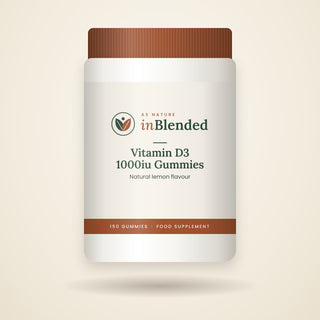
The corresponding formulation information identifies each gummy as providing 25 micrograms (µg) of vitamin D3, equivalent to 1,000 IU . The ingredient list supplied for this formulation is glucose syrup, sugar, water, pectin, citric acid, sodium citrate, cholecalciferol, coconut oil, carnauba wax, natural lemon flavour and paprika extract for colour.
The stated serving is one gummy daily for adults and children over 12. The gummies should be chewed rather than swallowed whole. The formula is suitable for vegetarians and vegans.
What does vitamin D do?
Vitamin D helps the body absorb and use calcium and phosphorus. It contributes to the maintenance of normal bones and teeth, normal muscle function and the normal function of the immune system.
The body can produce vitamin D in the skin when it is exposed to sufficient ultraviolet B (UVB) sunlight. In the UK, sunlight is generally not strong enough for meaningful vitamin D production during the winter months. Vitamin D can also be obtained from foods such as oily fish, egg yolks and liver, and from some fortified foods.
Severe deficiency can cause rickets in children and osteomalacia in adults.
How much is 1,000 IU?
One thousand international units (IU) is 25µg of vitamin D. That is more than the UK public-health recommendation for most people.
The NHS advises adults and children aged four and over to consider taking a daily supplement containing 10µg (400 IU) during autumn and winter. People who have little or no sun exposure, cover most of their skin when outdoors, or have darker skin may be advised to consider taking 10µg throughout the year.
A 25µg gummy provides two and a half times the standard 10µg public-health supplement amount. This does not automatically mean it is unsuitable, but it is important to count vitamin D from all supplements and fortified products. Do not take a higher dose simply because it is available.
For adults, the established upper safe intake level is 100µg (4,000 IU) per day from all sources unless a clinician recommends otherwise. This is a safety ceiling, not a target. Children have lower upper limits, and this particular product's directions specify use only for those over 12.
Why choose a gummy?
Gummies can be easier to take for people who dislike swallowing tablets or capsules. Pectin is a plant-derived gelling agent, unlike gelatine, which is animal-derived. The lemon flavour and chewable format may make a daily routine more convenient.
However, a gummy is still a food supplement. The formulation includes glucose syrup and sugar, so it should not be treated as a sugar-free sweet. Keep the bottle out of children's reach and do not allow children to eat gummies as sweets.
Who may need vitamin D throughout the year?
Some people are more likely to have low vitamin D because of limited sunlight exposure, covering most of their skin outdoors, darker skin, or being housebound. People with certain medical conditions affecting absorption or vitamin D metabolism may need individual advice. A GP or pharmacist can help decide whether supplementation, testing or a prescribed treatment dose is appropriate.
Routine vitamin D blood tests are not needed for everyone. Testing may be considered when symptoms, medical conditions or other risk factors make it clinically appropriate.
Safety and interactions
Taking too much vitamin D over time can cause hypercalcaemia (too much calcium in the blood). Possible symptoms include nausea, vomiting, weakness, excessive thirst, frequent urination and kidney problems.
Ask a GP or pharmacist before using vitamin D supplements if you have kidney disease, a history of kidney stones, high blood calcium, sarcoidosis or another condition affecting calcium or vitamin D metabolism. Some medicines can alter vitamin D levels or calcium balance.
Avoid doubling up with other vitamin D products, including multivitamins, unless you have checked the combined amount. Follow the label's age limits and serving instructions. If you are pregnant, breastfeeding, taking regular medication or under medical supervision, seek personalised advice.
Food sources of vitamin D
Useful dietary sources include:
- Oily fish such as salmon, sardines, trout and mackerel.
- Egg yolks.
- Liver.
- Some fortified breakfast cereals, spreads and plant-based drinks.
A varied diet is important, but food alone may not reliably provide the recommended vitamin D intake for everyone in the UK.
The bottom line
Each gummy in this 150-piece lemon-flavoured product provides 25µg (1,000 IU) of vitamin D3. Vitamin D has well-established roles in normal bones, teeth, muscle function and immune function. The 25µg dose is higher than the NHS's usual 10µg public-health recommendation, so users should check their total intake from all supplements and follow the age and serving directions.
Gummies may be convenient, but they contain sugar and must be stored safely away from children.
*This article is for general educational purposes and is not a substitute for individual medical advice. Food supplements should not replace a varied, balanced diet and healthy lifestyle.*
Sources and further reading
- As Nature inBlended – published product navigation listing Vitamin D3 1000iu, 150 lemon flavour gummies: https://www.asnatureinblended.com/blogs/news/a-guide-to-the-nutrients-and-benefits-of-fruit
- Current As Nature inBlended All Supplements collection: https://www.asnatureinblended.com/collections/supplements
- NHS – Vitamin D: https://www.nhs.uk/conditions/vitamins-and-minerals/vitamin-d/
- NIH Office of Dietary Supplements – Vitamin D, Health Professional Fact Sheet: https://ods.od.nih.gov/factsheets/VitaminD-HealthProfessional/
In our shop: Vitamin D3 1000 IU Lemon Gummies
This article is for general information and education only. It is not medical advice and is not intended to diagnose, treat, cure or prevent any disease. Food supplements should not be used as a substitute for a varied, balanced diet and a healthy lifestyle. Do not exceed the recommended daily intake. If you are pregnant, breastfeeding, taking medication, under medical supervision or have a health condition, speak to your GP or pharmacist before use. Keep out of the reach of children.