As Nature inBlended®

Vitamin D3 4,000 IU Gummies – Benefits, Daily Needs and Safety
Share
Vitamin D is essential for healthy bones and muscles, and it also contributes to normal immune function. The body can make vitamin D when skin is exposed to sunlight, but in the UK sunlight is not strong enough for this process throughout the year. Food and supplements can therefore play a role in maintaining an adequate intake.
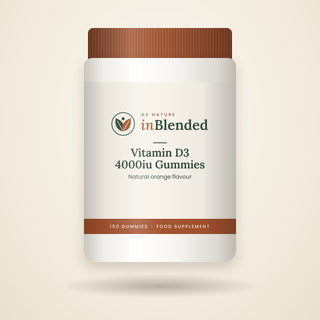
Not all vitamin D supplements contain the same amount. The As Nature inBlended Vitamin D3 4,000 IU Orange Gummies provide 100µg of vitamin D3 per gummy. This is a high-strength serving: it is equal to the NHS adult maximum daily amount from supplements, not the usual amount recommended for routine use by most people.
This guide explains vitamin D's functions, food sources, UK guidance and the precautions that matter when considering a 4,000 IU product.
What is vitamin D3?
Vitamin D is a fat-soluble vitamin. Vitamin D3, also known as cholecalciferol, is the form made in human skin after exposure to ultraviolet B (UVB) radiation and is also found in some animal-derived foods and supplements.
After it is made in the skin or absorbed from food, vitamin D undergoes processing in the liver and kidneys to form compounds the body can use. Vitamin D helps regulate calcium and phosphate, minerals needed for normal bone development and maintenance.
Vitamin D3 is used in supplements to help maintain vitamin D intake.
What does vitamin D contribute to?
Vitamin D contributes to:
- The normal function of the immune system.
- The maintenance of normal bones and teeth.
- The maintenance of normal muscle function.
- Normal absorption and utilisation of calcium and phosphorus.
- The maintenance of normal blood calcium levels.
- The process of cell division.
Vitamin D is important throughout life. In children, adequate vitamin D is needed for normal bone growth and development. In adults, it helps maintain normal bones and muscle function.
These recognised nutritional functions do not mean that taking a high dose will prevent infections, treat an autoimmune condition or cure muscle pain. Supplements are most useful when they address an inadequate intake or a clinically identified need.
How much vitamin D do people in the UK need?
UK public health advice recommends that adults and children aged four and over consider taking 10µg (400 IU) of vitamin D daily during autumn and winter. People who have little or no sun exposure, are housebound or in a care home, or usually cover most of their skin outdoors are advised to consider 10µg throughout the year. People with darker skin may also be at increased risk of not making enough vitamin D from sunlight and should consider year-round supplementation.
Children aged one to four should receive 10µg daily throughout the year. Separate advice applies to babies, including those who are breastfed or have limited formula intake.
One microgram (µg) of vitamin D is equivalent to 40 international units (IU). Therefore:
- 10µg = 400 IU.
- 25µg = 1,000 IU.
- 100µg = 4,000 IU.
The product featured in this article provides 100µg (4,000 IU) in one gummy. That is ten times the 10µg amount recommended for routine public-health supplementation for most adults.
Why is 4,000 IU an important dose?
The NHS advises adults not to take more than 100µg (4,000 IU) of vitamin D per day from supplements because taking too much over a long period can be harmful. This is the adult upper limit, not a target dose or a recommendation that everyone should take 4,000 IU.
Some people are prescribed higher doses for a limited period to treat a confirmed deficiency. Such treatment should be supervised by a healthcare professional, with the dose and duration chosen for the individual.
For routine supplementation, follow UK public-health advice unless a clinician has recommended a different amount. If you are already taking vitamin D in a multivitamin, bone-health product or another supplement, add the amounts together before considering an additional product.
What happens if vitamin D intake is too high?
Vitamin D increases the amount of calcium absorbed from the gut. Taking excessive amounts for too long can cause calcium to build up in the blood, a condition called hypercalcaemia.
Possible symptoms include:
- Nausea or vomiting.
- Loss of appetite.
- Constipation or abdominal discomfort.
- Excessive thirst and frequent urination.
- Weakness or muscle symptoms.
- Confusion or feeling unwell.
Severe or prolonged vitamin D toxicity can damage the kidneys and affect the heart. Toxicity is usually caused by excessive supplement intake rather than sunlight, because the skin regulates how much vitamin D it produces.
Do not combine several high-strength vitamin D products unless a healthcare professional has specifically advised you to do so.
Food sources of vitamin D
Only a limited range of foods naturally contain useful amounts of vitamin D. Sources include:
- Oily fish such as salmon, sardines, trout, herring and mackerel.
- Egg yolks.
- Red meat and liver.
- Some fortified breakfast cereals and fat spreads.
- Certain fortified plant-based drinks, depending on the brand.
In the UK, ordinary cow's milk is generally not fortified with vitamin D. Check product labels rather than assuming that all milk alternatives or breakfast cereals contain it.
Diet can contribute to vitamin D intake, but it can be difficult to obtain enough from food alone. This is one reason UK public-health guidance recommends considering a supplement during autumn and winter.
Sunlight and vitamin D
The body can produce vitamin D when bare skin is exposed to UVB sunlight. In the UK, sunlight is generally not strong enough for meaningful vitamin D production during the winter months. The amount made in sunnier months varies according to time outdoors, clothing, skin tone, age, location and other factors.
Sun exposure should never be used as a reason to risk sunburn. Protect your skin and follow NHS advice on sun safety. Vitamin D supplements can help maintain intake without deliberately increasing exposure to harmful ultraviolet radiation.
Who should take extra care with high-strength vitamin D?
A 100µg gummy is not a routine low-dose supplement. Speak to a GP or pharmacist before using it if you:
- Already take vitamin D or a multivitamin containing vitamin D.
- Have kidney disease or a history of kidney stones.
- Have high blood calcium or a condition that can affect calcium regulation.
- Have sarcoidosis or certain other granulomatous conditions.
- Are pregnant or breastfeeding.
- Take medicines that may interact with vitamin D or affect calcium levels.
Thiazide diuretics can increase the risk of high blood calcium when used with vitamin D. Some medicines, including orlistat and corticosteroids, can affect vitamin D absorption or status. A pharmacist or prescriber can check your particular medicines and circumstances.
Do not use a high-strength product to treat suspected deficiency without medical advice. A healthcare professional can decide whether a blood test is appropriate and recommend a suitable dose and duration.
About the As Nature inBlended Vitamin D3 4,000 IU Orange Gummies
It contains Vitamin D3 4,000 IU Gummies – 150 . Each orange-flavoured gummy provides:
- Vitamin D3 (cholecalciferol): 100µg / 4,000 IU.
- 2,000% of the product's stated Nutrient Reference Value (NRV).
The label's suggested serving is one gummy daily for adults. It says to chew the gummy rather than swallow it whole and not to exceed the stated dose.
The listed ingredients are glucose syrup, sugar, water, pectin (gelling agent), citric acid, sodium citrate, colecalciferol, coconut oil, carnauba wax, natural orange flavour and paprika extract (natural colouring).
The gummies are suitable for vegetarians and free from gluten, milk, soya and yeast, with no artificial colours, flavours, sweeteners or preservatives.
Important dose note: One gummy provides the adult upper limit of 100µg (4,000 IU) per day. It is not the usual 10µg daily amount recommended for routine supplementation for most adults. Do not combine it with other vitamin D supplements unless a healthcare professional has advised you to do so.
The takeaway
Vitamin D is essential for normal bones, teeth, muscle function, calcium absorption and immune function. UK public-health advice recommends that most adults consider 10µg (400 IU) daily during autumn and winter, with year-round supplementation for some groups at increased risk of low vitamin D.
The As Nature inBlended gummy contains 100µg (4,000 IU), which is the NHS adult upper daily limit. High-dose vitamin D is appropriate for some people in specific circumstances, but the dose should be selected with professional advice, particularly if you take other supplements or medicines or have a relevant medical condition.
*Food supplements should not be used as a substitute for a varied, balanced diet and a healthy lifestyle. Do not exceed the recommended daily dose. This article is for general education and is not individual medical advice.*
Sources and further reading
- As Nature inBlended – Vitamin D3 4,000 IU Orange Gummies, 150: https://www.asnatureinblended.com/products/vitamin-d3-4000iu-gummies-150
- NHS – Vitamin D: https://www.nhs.uk/conditions/vitamins-and-minerals/vitamin-d/
- US National Institutes of Health, Office of Dietary Supplements – Vitamin D: Consumer Fact Sheet: https://ods.od.nih.gov/factsheets/VitaminD-Consumer/
- US National Institutes of Health, Office of Dietary Supplements – Vitamin D: Health Professional Fact Sheet: https://ods.od.nih.gov/factsheets/VitaminD-HealthProfessional/
In our shop: Vitamin D3 4,000 IU Gummies
This article is for general information and education only. It is not medical advice and is not intended to diagnose, treat, cure or prevent any disease. Food supplements should not be used as a substitute for a varied, balanced diet and a healthy lifestyle. Do not exceed the recommended daily intake. If you are pregnant, breastfeeding, taking medication, under medical supervision or have a health condition, speak to your GP or pharmacist before use. Keep out of the reach of children.