As Nature inBlended®

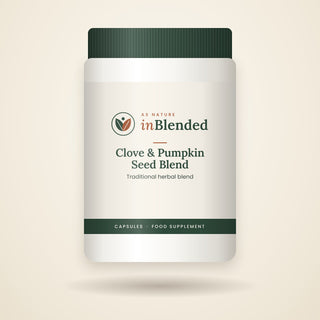
Clove & Pumpkin Seed Blend: what the ingredients do, what the evidence says and important precautions
Share
What's in each serving
90 capsules per pot. Each capsule provides:
| Ingredient | Amount | %NRV† |
|---|---|---|
| Pumpkin Seed* | 200mg | |
| Chicory Root | 120mg | |
| Black Garlic* | 100mg | |
| Cayenne Pepper* | 100mg | |
| Ceylon Cinnamon Bark* | 100mg | |
| Olive Leaf* | 100mg (Providing : 1.00mg of Oleuropeins) | |
| Clove Bud | 80mg | |
| Grapefruit Seed* | 75mg | |
| Fenugreek Seed* | 50mg | |
| Aniseed Powder | 25mg | |
| Oregano Leaf* | 25mg | |
| Shiitake Mushroom Mycellium | 25mg | |
| Konjac Powder | 20mg | |
| Lapacho Bark (Pau D'Arco) | 15mg | |
| Thyme Leaf | 10mg |
†NRV = Nutrient Reference Value. *Equivalent weight from extract.
Ingredients: Chicory Root (Cichorium Intybus), Capsule Shell: Hydroxypropyl Methylcellulose (HPMC), Clove Bud Powder (Syzygium Aromaticum), Stoneground Brown Rice Flour (Gluten Free) (Oryza Sativa), Shiitake Mushroom Powder, Aniseed Powder (Pimpinella anisum l.), Glucomannan Powder (Amorphophallus Konjac), Pumpkin Seed Extract (Curcubita Maxima), Lapacho Inner Bark Powder, Grapefruit Seed Extract (Citrus Paradisi), Fenugreek Seed Extract (Trigonella Foenum-Graecum), Cayenne Pepper Extract (Capsicum Annuum), Thyme Leaf Powder (Thymus Vulgaris), Natural Rice Concentrate (NuFlow) (Oryza Sativa), Olive Leaf Extract (Olea Europaea), Oregano Extract (Origanum Vulgare), Ceylon Cinnamon Bark Extract (Cinnamomum Zeylanicum), Black Garlic Extract (Allium Sativum).
How to take: Take 1 or 2 capsules, 1 to 3 times per day or as advised.
Introduction
Clove & Pumpkin Seed Blend is a multi-ingredient botanical food supplement. Its listed ingredients include chicory root, clove bud, shiitake mushroom, aniseed, konjac, pumpkin seed extract, lapacho (pau d’arco) bark, grapefruit seed extract, fenugreek, cayenne, thyme, bamboo silica, olive leaf, oregano, Ceylon cinnamon and black garlic.
This is a broad combination of plants with different traditional uses and different levels of scientific study. The presence of several ingredients does not, by itself, demonstrate that the finished product produces a particular health benefit.
What is in the blend?
- Chicory root (Cichorium intybus)
- Clove bud powder (Syzygium aromaticum)
- Shiitake mushroom fruiting-body powder (Lentinula edodes)
- Aniseed powder (Pimpinella anisum)
- Konjac powder (Amorphophallus konjac)
- Pumpkin seed extract (*Cucurbita* species; It contains *Curcubita Maxima*)
- Lapacho inner bark powder
- Grapefruit seed extract (Citrus paradisi)
- Fenugreek seed extract (*Trigonella foenum-graecum*)
- Cayenne pepper fruit extract (Capsicum annuum)
- Thyme leaf powder (Thymus vulgaris)
- Bamboo silica extract (Bambusa vulgaris)
- Olive leaf extract (Olea europaea)
- Oregano leaf extract (Origanum vulgare)
- Ceylon cinnamon bark extract (Cinnamomum zeylanicum)
- Black garlic extract (Allium sativum)
The capsule shell is hydroxypropyl methylcellulose (HPMC), and our product information also identifies stoneground brown rice flour.
The order of ingredients is not a substitute for a quantitative formula.
Chicory root and konjac: sources of fibre
Chicory root is a source of inulin, a fermentable dietary fibre. Inulin can be used by gut bacteria, but increasing intake quickly may cause wind, bloating, abdominal discomfort or looser stools in some people. People with irritable bowel syndrome who are sensitive to fermentable carbohydrates may find inulin aggravates symptoms.
Konjac is a source of glucomannan, a soluble fibre that absorbs water and forms a viscous gel. Glucomannan has been studied for effects on bowel function and cholesterol, but results depend on dose, product and study design.
Dry konjac or glucomannan products need particular care: take fibre supplements with sufficient water and follow the product label. They may be unsuitable for people with swallowing difficulties or narrowing of the oesophagus or gut. Do not take a dry fibre capsule without water, and seek medical advice if you have a history of bowel obstruction or significant swallowing problems.
Clove, aniseed, thyme, oregano and cayenne
These botanicals are familiar culinary ingredients and contain aromatic compounds that have been studied in laboratory settings.
Clove contains eugenol; thyme and oregano contain volatile oils including thymol and carvacrol; aniseed contains anethole; and cayenne contains capsaicinoids.
Concentrated extracts may also be different from normal food use. Clove and cayenne can irritate the digestive tract in some people. People who experience reflux, gastritis or sensitivity to spicy foods should be cautious.
Shiitake mushroom
Shiitake is an edible mushroom used in food and studied for compounds such as beta-glucans and lentinan. Research into mushroom extracts and immune markers is not the same as proof that a capsule prevents infections or treats illness.
Mushrooms can cause allergic reactions in susceptible people. Anyone with a known mushroom allergy should avoid the product unless advised otherwise by an appropriate clinician.
Pumpkin seed extract
Pumpkin seeds provide nutrients and plant compounds, and pumpkin seed preparations have been investigated in small studies, including research relating to urinary symptoms. However, results from specific pumpkin seed oils or standardised extracts cannot automatically be transferred to an unspecified pumpkin seed extract in a multi-ingredient capsule.
Fenugreek
Fenugreek seeds are used in cooking and contain fibre and other plant compounds. Small human studies have explored possible effects on blood glucose and blood lipids, but the evidence is not strong enough to assume a reliable benefit from this blend.
Fenugreek can cause digestive symptoms and allergic reactions. Larger supplemental amounts may lower blood glucose, so people taking insulin or other glucose-lowering medicines should seek advice before using it. Fenugreek supplements should be avoided during pregnancy; food-level culinary use is a different exposure. People with peanut or other legume allergies should also discuss the ingredient with a healthcare professional.
Lapacho (pau d’arco)
Lapacho is the inner bark of South American trees. It has a history of traditional use and laboratory research has investigated compounds such as lapachol. These findings have not established that lapacho treats infections, cancer or other diseases in people.
Memorial Sloan Kettering notes that human evidence is limited and describes possible side effects including nausea and vomiting. It also advises caution with anticoagulant or antiplatelet medicines because of a potential bleeding interaction. The clinical significance for this particular small-quantity, undisclosed blend is unknown, but people taking warfarin, apixaban, rivaroxaban, clopidogrel or similar medicines should check with a pharmacist or prescriber before using it.
Grapefruit seed extract: an important quality question
Grapefruit seed extract is marketed in a variety of products, but its composition can vary. A published investigation of three commercial grapefruit seed extract products found synthetic preservative benzethonium chloride rather than authentic grapefruit seed extract in the samples tested. It does show why transparent sourcing and independent quality testing matter.
Anyone taking medicines with important interaction risks should discuss the full blend with a pharmacist rather than assuming a plant extract is automatically interaction-free.
Olive leaf, cinnamon, black garlic and bamboo silica
Olive leaf contains polyphenols such as oleuropein; cinnamon contains aromatic compounds; black garlic is aged garlic; and bamboo extracts are used as sources of silica. These ingredients have been researched to varying degrees, but findings from isolated compounds, laboratory work or particular standardised extracts do not prove that this combination improves blood pressure, blood glucose, immunity, hair, skin or nails.
Cinnamon species and preparations differ. Garlic supplements may affect bleeding risk, particularly alongside anticoagulant or antiplatelet medicines. People with diabetes or those taking blood-pressure medicines should ask a healthcare professional before using concentrated botanical combinations.
What does the evidence say overall?
The evidence for the individual ingredients is mixed and cannot be used as proof for the finished blend:
- Established nutritional role: chicory and konjac can provide soluble or fermentable fibre, but the quantity in this product is unknown.
- Early or limited human research: some individual ingredients, including fenugreek and pumpkin seed preparations, have been studied for specific outcomes, but results are not definitive and may not apply to this formula.
Who should take particular care?
- Take anticoagulants or antiplatelet medicines, including warfarin, apixaban, rivaroxaban or clopidogrel.
- Take medicines for diabetes or blood pressure.
- Are pregnant, trying to conceive or breastfeeding.
- Have a swallowing disorder, oesophageal narrowing, bowel obstruction history or significant digestive condition.
- Have allergies to fenugreek, legumes, mushrooms, garlic or any listed botanical.
- Are due to have surgery or are under medical supervision.
Stop taking the supplement and seek medical advice if you develop an allergic reaction, persistent abdominal pain, vomiting, unusual bleeding or other concerning symptoms.
Questions consumers should ask
Before choosing a complex botanical supplement, it is reasonable to look for:
- The exact amount of every ingredient per daily serving.
- Extract ratios and standardisation details where relevant.
- A clearly stated serving size and directions.
- Allergen and interaction information.
- Evidence of identity, purity and contaminant testing from a suitably qualified independent laboratory.
These details help consumers compare a product with published research and assess whether the ingredient quantities are meaningful.
Conclusion
Clove & Pumpkin Seed Blend combines a wide range of culinary and traditional botanicals, including fibre-containing chicory and konjac, fenugreek, pumpkin seed, shiitake and several aromatic herbs. Some ingredients have been investigated in human studies, while much of the evidence for others remains preliminary or laboratory-based.
Without that information, the research cannot be reliably matched to the finished product. Consumers should not regard the blend as a treatment for infection, parasites, digestive disease or any other medical condition, and people taking medication should seek professional advice before use.
Important: Food supplements should not replace a varied, balanced diet or prescribed treatment. Follow the product label and do not exceed the stated dose.
Sources and further reading
- As Nature inBlended – Clove & Pumpkin Seed Blend product information
- National Center for Complementary and Integrative Health – Fenugreek: Usefulness and Safety
- Memorial Sloan Kettering Cancer Center – Pau d’Arco
- National Center for Complementary and Integrative Health – Acai: Usefulness and Safety
- PubMed – Adverse effects by artificial grapefruit seed extract products in patients on warfarin therapy
- US regulation explaining the swallowing and obstruction risks of dry water-soluble fibre products when taken without adequate fluid: 21 CFR § 201.320
*This article is educational information, not individual medical advice. It has been written to distinguish evidence about individual ingredients from evidence about the finished product.*
Related guides
- Organic Mushroom Complex
- Dietary Fibre Complex: Psyllium, Plant Fibre and Digestive Health
- Ceylon Tea Benefits: Nutrition, Antioxidants, Caffeine and Health Effects
- Thyme Tea: Benefits, Uses, Preparation and Safety
In our shop: Clove & Pumpkin Seed Blend
This article is for general information and education only. It is not medical advice and is not intended to diagnose, treat, cure or prevent any disease. Food supplements should not be used as a substitute for a varied, balanced diet and a healthy lifestyle. Do not exceed the recommended daily intake. If you are pregnant, breastfeeding, taking medication, under medical supervision or have a health condition, speak to your GP or pharmacist before use. Keep out of the reach of children.