As Nature inBlended®

Liposomal Vitamins D3 + K2 – What the Formula Provides and What the Evidence Says
Share
What is this supplement?
Each serving provides:
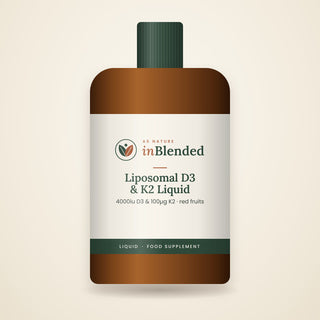
- Vitamin D3: 4,000 IU (100µg)
- Vitamin K2 MK-7: 100µg
The ingredient list includes purified water, xylitol, vegetable glycerol, phosphatidylcholine-rich sunflower lecithin, potassium sorbate, an olive-oil-based K2 compound, natural flavourings, and a medium-chain-triglyceride-based D3 compound. It is vegetarian.
Follow the current bottle label for the exact serving size and directions.
What's in each serving
60ml liquid per bottle. Serving Size:
| Ingredient | Amount | %NRV† |
|---|---|---|
| 1mlServings Per Bottle: 60Vitamin D3 | 100µg (4000iu) | 2000% |
| Vitamin K2 (Menaquinone-7) | 100µg | 133.3% |
†NRV = Nutrient Reference Value. *Equivalent weight from extract.
Ingredients: Ultra-Purified Water, Phospholipids (Lipoid®, non-GMO Sunflower), Vitamin D3 (as cholecalciferol, source: algae), Vitamin K2 (as Menaquinone-7), Xylitol (Sweetener), Natural Apple and Natural Vanilla Flavouring, Glycerol, Citric Acid (acidity regulator), Potassium Sorbate (preservative), D-alpha-tocopherol (antioxidant).
How to take: Shake before use. Take 1ml (use the dropper measure) per day, or as professionally directed. Can be added to a liquid of your choice or taken directly by mouth.
What does vitamin D3 do?
Vitamin D helps the body absorb and use calcium and phosphorus. It contributes to the maintenance of normal bones and teeth, normal muscle function and the normal function of the immune system.
The body can make vitamin D in the skin through exposure to UVB sunlight. In the UK, sunlight is generally not strong enough for meaningful vitamin D production during the winter months. Oily fish, egg yolks, liver and fortified foods provide some dietary vitamin D, but it can be difficult to obtain enough from food alone.
What does vitamin K2 do?
Vitamin K is needed for normal blood clotting and contributes to the maintenance of normal bones. K2 is one family of vitamin K compounds; MK-7 is a form of menaquinone.
Vitamin K-dependent proteins are involved in bone biology and calcium regulation. This has led to interest in whether K2 supplements may support bone health. However, evidence that a supplement improves meaningful outcomes such as fracture prevention in the general population remains uncertain. A biological role or plausible mechanism is not proof that taking extra K2 will prevent osteoporosis or cardiovascular disease.
Why combine D3 and K2?
Vitamin D supports calcium absorption, while vitamin K is involved in the activation of proteins that depend on vitamin K. These different roles explain why the nutrients are often combined in supplements.
That does not mean that everyone taking vitamin D needs an additional K2 supplement. Nor does it establish that the combination prevents calcium from being deposited in arteries or guarantees stronger bones. Those are stronger claims than current clinical evidence can support.
Adequate dietary intake, appropriate vitamin D status, weight-bearing activity, not smoking and other lifestyle factors all matter for bone health.
What does “liposomal” mean?
Liposomes are microscopic structures made from phospholipids, the same broad type of fat-like molecules that form cell membranes. They can be used as carriers for nutrients and medicines. This product lists sunflower lecithin as a source of phosphatidylcholine.
Liposomal delivery is an area of scientific research, but the word “liposomal” alone does not prove that a particular supplement is absorbed better, works faster or produces better health outcomes than a conventional product. Those claims need reliable studies on the actual formulation, dose and intended outcome.
Is 4,000 IU of vitamin D a routine dose?
No. The stated 4,000 IU is equivalent to 100µg of vitamin D3. UK public-health advice is that adults and children aged four and over should consider 10µg (400 IU) daily during autumn and winter. Some people at increased risk of low vitamin D may be advised to take 10µg throughout the year.
The adult upper safe intake level is 100µg (4,000 IU) per day from all sources, unless a clinician advises otherwise. This product's stated D3 amount is therefore equal to that upper limit for adults, not the usual public-health recommendation. The upper limit is not a target dose.
Do not combine it with other vitamin D supplements or high-dose multivitamins without calculating the total. Children have lower upper limits and should not be given this adult-strength product unless a healthcare professional specifically advises it.
Who should take particular care?
Ask a GP or pharmacist before using a high-strength vitamin D supplement if you have kidney disease, a history of kidney stones, high blood calcium, sarcoidosis or another condition that may affect calcium or vitamin D metabolism. Some medicines can also affect vitamin D or calcium balance.
Too much vitamin D over time can cause hypercalcaemia (excess calcium in the blood), potentially leading to nausea, vomiting, weakness, excessive thirst, frequent urination and kidney complications.
Important: vitamin K and warfarin. Vitamin K intake can affect how warfarin works. People taking warfarin should not start, stop or change a vitamin K-containing supplement without speaking to their anticoagulation team or prescriber. Keeping vitamin K intake consistent is important. If you take another anticoagulant, ask a pharmacist or prescriber whether the product is appropriate rather than assuming all blood thinners behave alike.
What about food sources?
Vitamin D is found in oily fish, egg yolks and liver, and is added to some fortified foods. Vitamin K is present in green leafy vegetables such as spinach, kale and broccoli, as well as vegetable oils and some other foods. A varied diet can provide vitamin K, while vitamin D intake may need more attention during the UK winter.
The bottom line
This liquid provides a clearly stated high-strength combination of 100µg (4,000 IU) vitamin D3 and 100µg vitamin K2 as MK-7. Vitamin D and vitamin K have established roles in normal body function, including bone health, but the evidence does not justify treating this combination as a proven way to prevent fractures, osteoporosis or arterial calcification.
The vitamin D dose is at the adult upper safe intake level, not the standard UK daily recommendation.
*This article is for general educational purposes and is not a substitute for individual medical advice. Food supplements should not replace a varied, balanced diet and a healthy lifestyle.*
Sources and further reading
- As Nature inBlended – LIPOSOMAL Vitamins D3 + K2: https://www.asnatureinblended.com/products/liposomal-vitamins-d3-k2
- NHS – Vitamin D: https://www.nhs.uk/conditions/vitamins-and-minerals/vitamin-d/
- NHS – Vitamin K: https://www.nhs.uk/conditions/vitamins-and-minerals/vitamin-k/
- NIH Office of Dietary Supplements – Vitamin D, Health Professional Fact Sheet: https://ods.od.nih.gov/factsheets/VitaminD-HealthProfessional/
- NIH Office of Dietary Supplements – Vitamin K, Health Professional Fact Sheet: https://ods.od.nih.gov/factsheets/VitaminK-HealthProfessional/
- NHS – Warfarin: https://www.nhs.uk/medicines/warfarin/
Related guides
- Vitamin D3 4,000 IU Gummies – Benefits, Daily Needs and Safety
- Green Tea — Catechins, Antioxidants and What the Evidence Really Says
In our shop: Liposomal
This article is for general information and education only. It is not medical advice and is not intended to diagnose, treat, cure or prevent any disease. Food supplements should not be used as a substitute for a varied, balanced diet and a healthy lifestyle. Do not exceed the recommended daily intake. If you are pregnant, breastfeeding, taking medication, under medical supervision or have a health condition, speak to your GP or pharmacist before use. Keep out of the reach of children.